National B.A.M.E Health & Care Awards 2026: Celebrating the People Turning Equity into Action
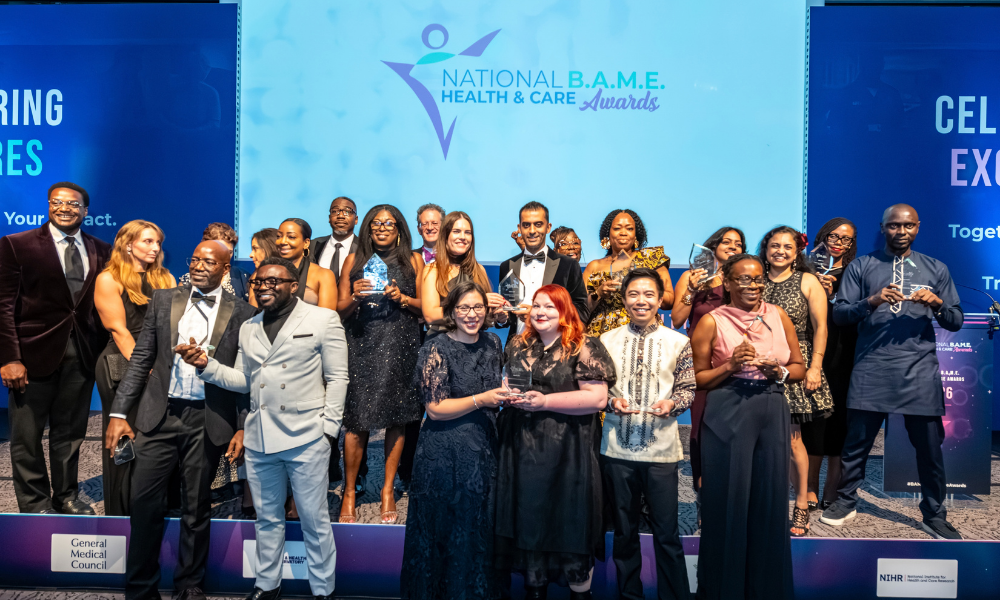
The National B.A.M.E Health & Care Awards returned to London on 17 September 2026, bringing together professionals, leaders, innovators, community partners and supporters from across health and social care for an evening dedicated to recognition, achievement and impact.
Held at Leonardo Royal Hotel London St Paul’s, the Awards followed the 2026 B.I.D.E Workforce Summit, Race to Equity: Workforce Justice, Power and Protection in Health & Care, creating a day that moved deliberately from challenge and evidence to action and celebration. BAME Health Sciences Awards
This year’s winners demonstrated just how broad that action can be.
It can mean changing a clinical pathway. Opening a route into leadership that previously did not exist. Using technology to address an overlooked health inequality. Creating a community partnership that reaches people traditional services have struggled to engage. Challenging workplace inequity. Or simply seeing something that is not working — and deciding not to accept it.
From practical innovation to system change
Across the 2026 winners, a recurring theme was the ability to turn an identified inequality into practical action.
Anu Sebastian, winner of Emergency & Critical Care, transformed a paper resuscitation-trolley checklist into a digital system achieving 100% completion and real-time accountability — an innovation now being rolled out more widely.
Luxmi Dhoonmoon, named B.A.M.E Nurse of the Year, addressed an important patient-safety inequality in recognising skin damage in darker skin tones. Her assessment tool is now embedded within her Trust and shared across multiple integrated care systems.
Clinician of the Year Sanjeev Nayak was recognised for helping to establish one of the UK’s first 24/7 mechanical thrombectomy services. The work has improved outcomes for more than 2,000 patients and helped inform wider NHS development of stroke pathways.
And Sarah Chitongo, Health Equity Digital Innovator of the Year, demonstrated how digital innovation can be designed around equity from the outset, addressing conditions affecting Black women where delayed diagnosis and dismissal of symptoms remain significant concerns.
Leadership that changes systems
The Awards also recognised leadership that has moved inclusion beyond programmes and statements into organisational practice.
Helen Gbinigie, winner of Inclusive Leader of the Year – Strategic/System Impact, was recognised for translating an identified inequality in neonatal care into a national programme spanning all four UK nations.
Joselyn King, winner of Inclusive Leader of the Year – Staff Voice/Frontline & Community Impact, was recognised for work embedding race equality into recruitment, governance, executive accountability and staff voice across a workforce of around 16,000 people.
And West London NHS Trust, named Inclusive Organisation/Trust of the Year, demonstrated what becomes possible when inclusion is embedded into core strategy, Board accountability and measurable organisational outcomes rather than positioned as a standalone initiative.
These stories matter because they show that equity does not sit outside organisational performance. It influences who progresses, who is heard, how services are designed, whether communities trust them and ultimately the quality of care people receive.
Community voice at the centre
Some of this year’s most compelling work started by listening differently.
The GPA Cancer Screening Awareness Project, winner of Excellence in Community Partnerships, worked through trusted community leaders to improve awareness, confidence and engagement with cancer screening among communities experiencing barriers to access.
Monique Bovell, winner of the Public Health Impact Award, was recognised for culturally safe, community-led work addressing breastfeeding inequalities, amplifying the experiences of Black families and helping establish an annual Black Breastfeeding Week within the local public-health offer.
And Advocacy and Patient Experience Champion Haris Sultan demonstrated what meaningful participation can look like at scale. A youth forum initiative that began across 15 NHS Trusts grew to around 60, creating opportunities for more than 1,000 children and young people — including those from under-represented communities — to influence the health and care they receive.
Creating opportunity and developing the workforce
Recognition also went to those reshaping who gets access to development and opportunity.
Keannu M. Arnoco, Educator or Workforce Developer of the Year, has helped create structured career and development pathways for more than 1,200 clinical assistant colleagues across hospital and community settings.
Karen Chummun, Trailblazer in Inclusion Excellence, was recognised for developing scalable networks widening access to mentoring, coaching, career support and professional development.
And Future Leader Award winner Anju John demonstrated what purposeful leadership can achieve early in a career, leading tobacco-dependency treatment across multiple hospital sites and extending the pathway into lung cancer screening.
Recognition for a lifetime of impact
For only the most exceptional circumstances, one Lifetime Achievement Award would not have been enough.
The 2026 judges selected two recipients: Professor JS Bamrah CBE and Professor Partha Kar.
Professor Bamrah was recognised for more than four decades combining clinical service with national advocacy on health equality, occupational risk, discrimination and safety.
Professor Kar was honoured for his contribution to transforming diabetes care nationally, widening access to technology and translating innovation into mainstream NHS practice.
Both careers demonstrate something central to the purpose of these Awards: sustainable change rarely happens through one intervention. It comes from years of persistence, influence, courage and a willingness to continue challenging what could be better.
The 2026 National B.A.M.E Health & Care Awards winners
v Advocacy and Patient Experience Champion Award — Haris Sultan
v Ally of the Year – Sponsored by NHS Race & Health Observatory — Chris Holland
v B.A.M.E Midwife of the Year — Trish Mugwangi
v B.A.M.E Nurse of the Year — Luxmi Dhoonmoon
v Clinical AHP Champion of the Year — Babatunde Oyeneyin
v Clinician of the Year – Sponsored by GMC — Sanjeev Nayak
v Educator or Workforce Developer of the Year — Keannu M. Arnoco
v Emergency & Critical Care — Anu Sebastian
v Excellence in Community Partnerships — GPA Cancer Screening Awareness Project
v Future Leader Award / Next Gen (18–30) — Anju John
v Health Equity Digital Innovator of the Year — Sarah Chitongo
v Inclusive Leader of the Year – Strategic / System Impact — Helen Gbinigie
v Inclusive Leader of the Year – Staff Voice / Frontline & Community Impact — Joselyn King
v Inclusive Organisation / Trust of the Year — West London NHS Trust
v Lifetime Achievement Award — Professor JS Bamrah CBE and Professor Partha Kar
v Outstanding Social & Community Care Award — Kara Healthcare
v Pioneering Health Equity Researcher of the Year – Sponsored by NIHR — Candice Bryan
v Public Health Impact Award — Monique Bovell
v Trailblazer in Inclusion Excellence – Sponsored by UNISON — Karen Chummun
Recognition is only the beginning
The National B.A.M.E Health & Care Awards were created to make visible contributions that have too often gone unseen.
But recognition is most valuable when it creates something beyond the moment itself: new conversations, greater visibility, shared learning, stronger networks and the confidence for others to act.
Over the coming months, we will be introducing you more closely to our 2026 winners, sharing the stories behind their work, what they have learnt and what they believe needs to happen next.
We will also revisit some of the most important conversations from the 2026 B.I.D.E Workforce Summit as we continue exploring what it takes to move from evidence and intention to practical action.
And then the journey begins again.
Who should we be recognising in 2027?
Keep following the National B.A.M.E Health & Care Awards as we share more from the class of 2026 and prepare to open the next chapter.